Best Coatings for Healthcare Facilities in Connecticut
Healthcare Facilities Need More Than Ordinary Commercial Paint
Choosing paint for a healthcare facility is a lot more involved than picking a color that looks good. Hospitals, medical offices, urgent-care centers, rehab facilities, assisted-living communities, labs, and outpatient clinics all put real demands on their painted surfaces — frequent cleaning, hospital-grade disinfectants, constant hand contact, wheelchairs and medical carts bumping into walls, moisture, the occasional bodily-fluid spill, staining, and heavy traffic that never really stops.
The right coating has to support that facility's actual cleaning and maintenance routine while keeping odor, downtime, and disruption to a minimum during application. A paint that works great in a standard office might fall apart in a busy emergency department, a medical corridor, a lab, or a senior-care facility. For Connecticut healthcare properties — whether you're in New Haven, Branford, Guilford, Madison, North Haven, Hamden, Cheshire, Milford, Orange, Wallingford, Fairfield, Bridgeport, Stratford, Shelton, Trumbull, Westport, Norwalk, Stamford, or Greenwich — product selection really needs to come down to the specific room, the traffic it sees, how it's cleaned, and what the facility actually needs from it. There's no single paint that's best for every healthcare environment. The goal is building a complete coating system tailored to each area of the building.
What Actually Makes a Coating "Healthcare Grade"?
Depending on the space, a healthcare coating might need to check quite a few boxes at once — low odor, low VOC content, fast drying, a short return-to-service window, washability, scrub and chemical resistance, resistance to whatever disinfectant the facility uses, stain resistance, moisture and mildew resistance, scuff resistance, impact resistance, seamless coverage, slip resistance, and an easy touch-up process down the road. No single coating does all of that equally well. A low-odor acrylic might be perfect for an occupied administrative office, while a two-component epoxy or urethane makes a lot more sense in a utility room, lab, high-abuse corridor, or anywhere that gets sanitized constantly. The trick is figuring out which of these characteristics actually matter most in each specific location, rather than assuming one product can do it all.
Start With How the Facility Actually Cleans Its Surfaces
Before I'd ever recommend a product, I want to know how that facility cleans. Healthcare disinfectants often contain alcohol, hydrogen peroxide, quaternary ammonium compounds, chlorine-based ingredients, or other facility-approved chemicals, and repeated exposure to any of these can soften, discolor, dull, streak, or otherwise damage a coating that wasn't built to handle it. CDC guidance is pretty clear that routine and targeted cleaning should track with patient contact and how soiled a surface gets, and that frequently touched surfaces close to patients generally need more attention than the rest.
Before picking a product, I'd want to know which cleaners and disinfectants are currently in use, how often surfaces get cleaned, whether disinfectants are left wet for a required contact time, whether walls get scrubbed or just lightly wiped, whether different departments use different products, whether chemical spills are common, and whether the cleaning protocol is likely to change down the road. Whenever it's possible, I'd also want written confirmation from the coating manufacturer that their system is actually compatible with what the facility is using.
High-Performance Acrylic Coatings
Water-based acrylics are the workhorse in most medical offices, patient rooms, waiting rooms, and administrative spaces. They tend to have low odor, low VOC content, dry fast, wash well, go on easily, and let the facility get back to normal use relatively quickly — plus future touch-ups are usually pretty straightforward. That makes them a strong fit for medical offices, exam rooms, patient rooms, waiting areas, reception spaces, administrative offices, staff lounges, and lower-traffic corridors.
One thing I always point out to Connecticut facilities: water-based acrylics are generally easier to schedule around occupied spaces because they create less odor and disruption than a lot of traditional solvent-based systems. That said, standard architectural acrylic isn't always tough enough for every healthcare space, and it's worth distinguishing between ordinary commercial wall paint and the higher-performance acrylic systems actually built for repeated institutional cleaning.
Scuff-Resistant Architectural Coatings
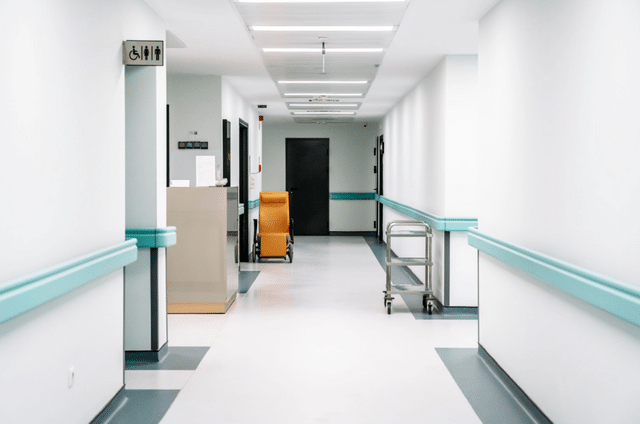
Corridors, waiting rooms, nurse stations, elevators, rehab areas, and patient-transport routes take a beating from wheelchairs, stretchers, carts, cleaning equipment, chairs, bags, and constant staff traffic. Scuff-resistant coatings are formulated specifically to cut down on the black marks, rubbing, and surface damage that come with all that movement — which makes them a good fit for main corridors, emergency-department hallways, elevator lobbies, rehab centers, pediatric facilities, senior-care communities, and busy outpatient offices.
A scuff-resistant finish can meaningfully reduce how often you need to repaint and make routine cleaning easier day to day. For a large outpatient facility in New Haven or Stamford, cutting down on repaint frequency alone can save real money and disruption over time. Just make sure to verify chemical compatibility too, since scuff resistance doesn't automatically mean the coating stands up to every disinfectant it'll come into contact with.
Pre-Catalyzed Water-Based Epoxy Coatings
These sit in a useful middle ground between ordinary acrylic wall paint and the heavier two-component industrial systems. Pre-catalyzed water-based epoxies generally offer better scrub resistance, improved stain resistance, stronger chemical resistance, and a harder overall finish, while still applying like a water-based product with lower odor than a lot of traditional epoxies. That makes them worth considering for exam rooms, treatment rooms, corridors, labs, restrooms, utility areas, procedure-support spaces, and high-contact walls.
They're not indestructible, though, so it's worth reviewing cure time, recoat time, chemical-resistance data, disinfectant compatibility, surface prep requirements, sheen, odor, and how touch-ups will look down the road. Because harder coatings tend to show touch-up work differently than a soft acrylic, it's worth having that long-term maintenance conversation before the project even starts.
Two-Component Epoxy Coatings
These create a genuinely hard, durable finish and make the most sense where walls, floors, or other surfaces face aggressive cleaning, chemical exposure, moisture, or real physical abuse — labs, utility rooms, mechanical spaces, sterile-processing support areas, service corridors, laundry rooms, pharmaceutical spaces, and other high-abuse environments. You get strong adhesion, high chemical resistance, excellent abrasion resistance, moisture resistance, and a genuinely long service life out of these systems.
The tradeoff is real complexity — more involved mixing, a limited working window once it's mixed, stronger odors during application, longer cure times, more demanding surface prep, tricky future touch-ups, and more downtime overall. Some formulations can also yellow or shift in appearance under certain conditions. These are systems I'd generally want to spec with input from the facility, the coating manufacturer, and a design professional when the project calls for it.
Urethane and Polyurethane Coatings
Urethanes get chosen when a space needs better abrasion, impact, stain, or chemical resistance than a standard acrylic can offer — as wall finishes, door and trim coatings, floor topcoats, protective layers over epoxy, or as a high-performance maintenance coating generally. They bring strong abrasion resistance, good color and gloss retention, chemical resistance, and real hardness and durability to high-traffic corridors, service areas, doors and frames, labs, pharmaceutical spaces, and high-performance flooring.
Some urethane systems carry stronger odors or more demanding application requirements than a standard acrylic, so it's worth reviewing ventilation, containment, cure time, and return-to-service expectations carefully before approving the product.
Epoxy and Resinous Flooring Systems
Healthcare floors deal with nonstop foot traffic, wheelchairs, stretchers, carts, rolling equipment, cleaning chemicals, disinfectants, occasional bodily-fluid exposure, moisture, and slip hazards — a lot to ask of any single surface. Seamless resinous flooring can be a strong fit for medical, lab, pharmaceutical, and other institutional spaces, offering seamless coverage, chemical resistance, easy cleaning with no waxing required, integral cove-base options, slip-resistant textures, stain resistance, moisture resistance, and real long-term durability.
These systems tend to show up in labs, pharmacies, utility rooms, commercial kitchens, ambulance or service areas, sterile-processing support rooms, rehab areas, certain operating-support spaces, and mechanical rooms. Choosing the right one comes down to the substrate condition, moisture levels, traffic, slip-resistance needs, cleaning chemicals used, drainage, desired texture, cove-base requirements, downtime tolerance, and cure schedule — and the floor needs to be tested and prepped according to the manufacturer's spec before installation begins.
Moisture- and Mildew-Resistant Coatings
Restrooms, locker rooms, shower areas, laundry spaces, kitchens, hydrotherapy rooms, utility spaces, and anywhere near plumbing all benefit from coatings formulated to tolerate moisture and resist mildew growing on the paint film itself. But before specifying anything, I always want to know where the moisture is actually coming from — condensation, a plumbing leak, a roof leak, poor ventilation, high humidity, water intrusion, or even the cleaning practices themselves. Paint should never be used to hide an unresolved moisture problem. The source has to be fixed first. A mildew-resistant coating can protect the paint film once that's done, but it's not a substitute for real moisture control, ventilation, cleaning, or building repairs.
Stain-Blocking Primers
Healthcare surfaces develop stubborn stains from water leaks, smoke, adhesives, old coatings, markers, cleaning products, rust, bodily fluids, and sometimes contaminants nobody can quite identify. Paint straight over these stains without the right primer, and there's a real chance they bleed right back through. A compatible stain-blocking primer usually solves this — but only after the actual source of the stain gets addressed. Water stains mean investigating the leak. Rust means treating the metal underneath. Mold means proper remediation, not just a coat of paint. Adhesive residue needs to be cleaned off first. The right primer might be water-based, alkyd, shellac-based, epoxy-based, or a specialty bonding product, and the choice should factor in odor, cure time, compatibility, and whether the space is occupied.
Bonding Primers
Medical facilities are full of tricky surfaces to paint over — glossy existing paint, tile, laminates, metal, previously coated doors, plastics, and factory finishes. A bonding primer helps new coating adhere to surfaces like these, but it's not a substitute for cleaning, sanding, de-glossing, or testing beforehand. Whenever I'm uncertain about an existing coating or substrate, I'll run an adhesion test first — poor adhesion underneath a new paint system can cause peeling even when the finish coat itself is top quality.
Corrosion-Resistant Coatings for Metal
Door frames, railings, mechanical equipment, pipes, utility-room components, exterior structures, and loading-area equipment are all common metal surfaces throughout a healthcare facility, and rust needs to be properly removed or stabilized before any coating goes on. Depending on the exposure, that might mean a rust-inhibitive primer, an epoxy primer, a direct-to-metal coating, a urethane finish, or a specialty corrosion-resistant system — chosen based on whether it's interior or exterior, how much moisture and chemical contact it sees, abrasion levels, the existing coating, the type of metal, and the appearance the facility wants.
Low-VOC and Zero-VOC Coatings
Low- and zero-VOC coatings can genuinely help reduce the indoor pollution load during an occupied healthcare project, and the EPA notes that VOC content should be weighed alongside overall composition and the performance the space actually needs, like durability and hiding ability. But "low-VOC" doesn't automatically mean odor-free, nontoxic, appropriate for every patient population, chemically resistant, durable enough for healthcare-level cleaning, or ready for immediate occupancy. Colorants, primers, caulks, patching compounds, and cleaners all contribute their own odor and emissions too, so it's worth reviewing the whole system, not just the finish coat. Proper ventilation and following the product label's precautions still matter, regardless of how low the VOC content is.
Microbicidal and Antimicrobial Coatings
These two terms get used pretty loosely, and it's worth understanding the difference. Some specialty coatings are actually registered or marketed to kill or inhibit specific microorganisms on the painted surface under defined conditions. Others simply contain preservatives meant to protect the paint film itself from mildew or bacterial deterioration — a completely different claim. A specialty coating like this can supplement a facility's sanitation program, but it never replaces cleaning, disinfection, hand hygiene, or established infection-control procedures — and manufacturers of these products say as much themselves. Before specifying one, I'd want to review any EPA registration, the approved claims, which organisms are actually covered, required contact time, cleaning compatibility, required film thickness, recoat requirements, warranty, and label instructions. Marketing language shouldn't be allowed to create expectations the product can't actually meet.
Coatings for Doors, Frames, and Trim
Doors, frames, windowsills, and trim take more physical contact than walls do — constant touching, occasional impacts, and repeated cleaning and disinfecting. A good trim coating needs hardness, block resistance, washability, chemical resistance, scuff resistance, a smooth application, fast drying, and solid adhesion. Waterborne acrylic-urethane or institutional enamel products work well in many occupied healthcare spaces, while more demanding environments might call for a full epoxy or urethane system. It's worth checking what's already on the surface — latex paint, alkyd enamel, a factory finish, bare metal, wood, or laminate — since surface testing and the right bonding primer often make the difference between a coating that holds and one that doesn't.
Coatings for Ceilings
Ceilings don't always have the same needs as walls. A standard flat ceiling paint is usually fine for administrative offices, waiting rooms, staff areas, and other low-moisture spaces, while restrooms, kitchens, labs, and other moisture-prone or frequently cleaned areas need something more robust. And before repainting any ceiling stain, it's worth investigating whether there's a roof leak, a plumbing leak, HVAC condensation, a sprinkler leak, or moisture sitting above the ceiling — painting over an active leak only hides the symptom for a little while.
Coatings for High-Touch Areas
The CDC draws a distinction between environmental surfaces like walls and floors and actual medical equipment surfaces, and generally speaking, high-touch areas get cleaned more often than low-touch walls. Door frames, push plates, railings, chair rails, corners, nurse-station walls, areas around light switches, and spots near hand-sanitizer stations all fall into that high-touch category, and they often benefit from higher-performance coatings, protective wall systems, corner guards, chair rails, or cleanable panels layered on top of routine maintenance. Paint alone isn't always the best protection for the highest-impact surfaces — sometimes combining a durable coating with physical wall protection is what actually holds up over time.
Picking the Right Sheen
Sheen affects appearance, washability, how visible imperfections are, and how easy future touch-ups will look. Flat or matte finishes hide wall imperfections nicely and create a softer look, which works well on some ceilings and lower-traffic walls, but they can be harder to clean and show damage sooner — though modern high-performance matte products have improved on this, so it's worth checking the actual product data. Eggshell tends to show up in patient rooms, offices, waiting areas, and exam rooms because it strikes a nice balance between appearance and cleanability. Satin offers better washability and moisture resistance and performs well in higher-traffic spaces, though it can highlight surface imperfections a bit more. Semi-gloss is the common choice for doors, frames, trim, restrooms, utility spaces, and other heavily cleaned areas — though a higher sheen doesn't automatically mean better chemical resistance. The actual formulation matters more than the shine.
Matching Coatings to the Right Areas
Generally, administrative offices do well with a high-performance acrylic prioritizing low odor, appearance, and easy touch-up. Waiting rooms benefit from a scuff-resistant acrylic. Exam rooms often call for a high-performance acrylic or pre-catalyzed epoxy, since cleanability, low odor, and disinfectant resistance all matter there. Patient rooms usually do well with an institutional acrylic or scuff-resistant coating. Corridors need real scuff, abrasion, and impact resistance, which points toward a scuff-resistant coating or full epoxy system. Restrooms need moisture and mildew resistance, so a moisture-resistant acrylic or epoxy makes sense. Labs and utility rooms typically call for epoxy or urethane systems given the chemical, moisture, and abrasion demands. Doors and frames need hardness and scuff resistance, pointing toward acrylic-urethane, enamel, epoxy, or urethane. Pharmacy areas want a high-performance acrylic or epoxy for cleanability and chemical resistance. Floors generally need a resinous epoxy or urethane system for seamless, chemical- and slip-resistant coverage. Kitchens and food-service areas need an approved high-performance system that handles moisture, grease, and constant cleaning. Senior-care residences do well with scuff-resistant acrylics that keep odor and washability in mind, and pediatric facilities benefit from high-performance or scuff-resistant acrylics chosen for washability, color retention, and impact resistance.
This is general guidance, not a substitute for evaluating your actual space — the final spec should always be based on real conditions and the manufacturer's recommendations.
Connecticut Brings Its Own Considerations
Healthcare properties across Connecticut vary enormously. A modern outpatient center in Stamford has very different surfaces and operational demands than an older medical building in New Haven, a shoreline practice in Guilford, a senior-care community in Madison, an urgent-care center in Milford, a rehab facility in North Haven, a specialty office in Fairfield, a lab in Norwalk, or a hospital support building in Bridgeport.
Older Connecticut facilities often come with multiple generations of paint layered on top of each other, oil-based coatings, plaster, sometimes lead-based paint, moisture damage, aging metal frames, incompatible previous coatings, or textures that are tough to match. Shoreline locations bring their own set of challenges too — higher humidity, salt exposure near entrances, moisture intrusion, corrosion on exterior metal, and heavier mildew pressure than you'd see further inland. All of this needs to be factored in before a coating gets specified.
Always Test Before Committing Facility-Wide
Whenever it's practical, I'd rather apply a sample or test area first. It's the best way to evaluate color, sheen, odor, coverage, drying time, how it looks under the facility's actual lighting, cleaning compatibility, touch-up quality, and whether the staff actually likes it. For high-performance systems, it's worth considering a formal test panel exposed directly to the facility's real disinfectant products. A small test up front can prevent a very expensive mistake applied across the whole building.
Review the Real Product Data, Not Just the Sales Pitch
Before approving anything, the facility should review the actual product data sheets, safety data sheets, VOC information, recommended film thickness, surface-prep requirements, recoat and cure times, chemical-resistance data, cleaning recommendations, application-temperature limits, and warranty terms. A contractor shouldn't be relying only on a sales brochure or a verbal recommendation, and manufacturer technical reps can be genuinely useful when a facility has unusual chemical, cleaning, moisture, or operational demands.
Think About Total Cost of Ownership, Not Just the Gallon Price
The cheapest can of paint on the shelf isn't necessarily the cheapest option over time. A more durable coating often means fewer repaints, less touch-up work, better resistance to cleaning damage, a better-looking space, less downtime, lower labor costs down the road, and longer stretches between maintenance cycles. That said, an expensive industrial coating is often overkill in a low-traffic administrative office. The real value comes from matching the coating to the actual exposure it'll face — don't over-spec the easy areas, and don't under-spec the ones taking real abuse.
Questions Worth Asking Before You Approve a Coating
I'd ask what type of room is being painted, how often the surface gets cleaned, and which disinfectants are actually used. Has the manufacturer confirmed compatibility with those products? How much physical abuse will the surface see, and is moisture present? Will the facility stay occupied during application, and what odor level is acceptable? How quickly does the area need to return to service, and how long does the coating actually take to fully cure — not just dry to the touch? Is it easy to touch up, and will the color or sheen make repairs obvious? What prep does it need, and is a bonding or stain-blocking primer necessary? Does the existing paint contain lead? Are there unresolved leaks or moisture issues anywhere nearby? Does the product need special ventilation, and what maintenance does the manufacturer recommend? Is the coating actually appropriate for Connecticut's conditions, and can a test area be completed before full installation?
Red Flags Worth Watching For
I'd be cautious of any contractor who recommends the same paint for the entire facility without exception, never asks about disinfectants, picks products based purely on price, or calls every low-VOC product "odor free" without qualification. Same goes for anyone claiming antimicrobial paint replaces cleaning, who can't provide real technical data, ignores curing time, skips evaluating the existing coating, or paints straight over moisture damage. Watch out for ordinary wall paint being used on high-abuse doors and frames, no adhesion testing being performed, glossy paint being specified just because it "looks" more washable, or a contractor who can't clearly explain the difference between acrylic, epoxy, and urethane. And be wary of anyone with no real plan for touch-ups or future maintenance.
Mark's Pro Tip
I always recommend building a coating schedule that covers the entire facility — documenting the room or area, the substrate, the existing coating, the prep required, the primer, the finish coating, sheen, color, number of coats, cleaning products used, cure time, and maintenance requirements. This keeps the same product from getting used everywhere out of pure convenience, and it gives the facility a permanent reference for future repairs, touch-ups, and maintenance planning.
Where I See Healthcare Coating Projects Go Wrong
The mistakes I run into most are using residential-grade paint in institutional spaces, ignoring disinfectant compatibility altogether, and choosing the same sheen for every room regardless of use. I'd also flag applying finish paint over unresolved contamination, skipping the fix for a moisture problem before painting, and not bothering with adhesion testing. Selecting coatings purely on VOC content, assuming zero-VOC automatically means zero odor, reopening a space before the coating has fully cured, and misusing antimicrobial marketing claims all come up regularly too — along with applying ordinary wall paint to doors or metal frames, forgetting about future touch-up needs, ignoring the substrate's actual condition, and failing to document what product and color went where.
Bottom Line
The best coating for a Connecticut healthcare facility isn't necessarily the priciest, the hardest, the lowest-VOC, or the one with the boldest marketing claims. It's the system that actually matches the real conditions of that space — cleaning frequency, disinfectant exposure, traffic, impact, moisture, chemical exposure, odor tolerance, occupancy, cure time, substrate, maintenance requirements, and long-term cost, all considered together.
High-performance acrylics tend to be the right call for occupied offices and patient rooms. Scuff-resistant coatings help protect corridors and waiting areas. Epoxy and urethane systems make more sense for labs, utility areas, doors, floors, and anywhere facing aggressive cleaning or physical abuse.
At MDF Painting & Power Washing, we help Connecticut healthcare facilities evaluate each area individually instead of recommending one generic product across the whole property. We work with commercial and healthcare clients throughout New Haven and Fairfield counties, including New Haven, Branford, Guilford, Madison, North Haven, Hamden, Cheshire, Milford, Orange, Wallingford, Fairfield, Bridgeport, Stratford, Shelton, Trumbull, Westport, Norwalk, Stamford, and Greenwich.
The right coating system should help a facility stay cleaner, look professional, hold up under daily use, and remain easy to maintain for years — all without creating unnecessary disruption during the actual installation.
Frequently Asked Questions
What is the best paint for healthcare walls?
There's no single best product. Many healthcare walls perform well with high-quality acrylic, scuff-resistant, or pre-catalyzed epoxy coatings, depending on cleaning frequency, traffic, chemical exposure, and how quickly the room needs to return to service.
Should healthcare facilities use epoxy paint everywhere?
No. Epoxy offers excellent durability and chemical resistance, but it's often unnecessary in low-traffic offices, and it can be more difficult to apply, cure, and touch up than a simpler acrylic system.
Is low-VOC paint always best for a medical facility?
Low-VOC coatings help reduce indoor pollution load, but selection should also weigh durability, overall composition, odor, chemical resistance, and what the room actually requires in terms of performance.
Can hospital disinfectants damage paint?
Yes. Repeated exposure to aggressive cleaners and disinfectants can soften, dull, stain, or strip coatings that aren't chemically compatible with what's being used to clean them.
What sheen is best for exam rooms?
Eggshell or satin finishes are commonly used because they balance appearance and cleanability well, though the coating formulation and disinfectant resistance ultimately matter more than sheen alone.
Is antimicrobial paint necessary in every healthcare facility?
No. Specialty antimicrobial or microbicidal products can be useful in certain applications, but they never replace cleaning and infection-control procedures. It's worth evaluating the specific claims, registration, cost, and limitations before specifying one.
What coating is best for hospital corridors?
Scuff-resistant architectural coatings, pre-catalyzed epoxies, or other high-performance systems can all be appropriate depending on traffic, impact, cleaning routine, and maintenance expectations.
What's the best coating for healthcare floors?
Seamless epoxy, urethane, or other resinous flooring systems tend to work well in labs, utility rooms, pharmacies, and other demanding areas — the right system depends on the substrate, moisture, slip resistance, chemical exposure, and traffic.
How soon can a medical room reopen after painting?
That depends on the coating, ventilation, temperature, odor, dry time, cure time, and the facility's own policy. Dry to the touch doesn't mean fully cured.
Should the facility test its disinfectant on the new paint?
Yes, whenever practical. A test area or a compatibility review from the manufacturer can catch potential damage before the product goes up throughout the whole facility.