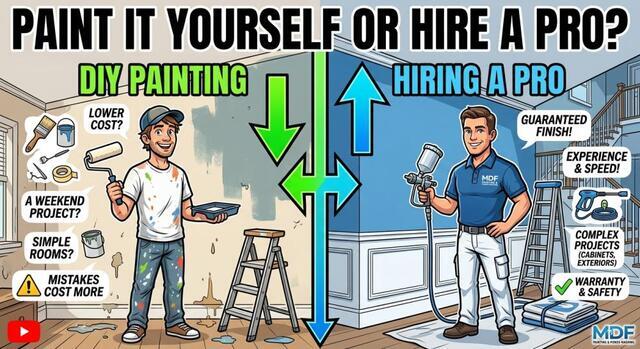
DIY Painting vs. Hiring Professional Painters: Which Is Right for Your Home?
Should You Paint It Yourself or Hire a Professional?
Painting is one of those home improvement projects almost every homeowner considers doing themselves at some point. On the surface, it seems simple enough — buy the paint, grab a roller, move some furniture, and get going. And honestly, for a small room in good condition, that's often a perfectly reasonable plan. But larger, more detailed, or more demanding projects tend to require a lot more time, preparation, equipment, and skill than most homeowners expect going in.
The right call really depends on the size of the project, the condition of the surfaces, your own experience, how much time you have, and how polished you want the final result to look. I want to walk you through an honest comparison so you can make that call with your eyes open.
When DIY Painting Tends to Make Sense
There are plenty of projects a motivated homeowner can knock out successfully on their own. DIY tends to work well when the project is small, the walls are already in decent shape, the ceilings are a standard height, there isn't much trim involved, the color change is simple, you already own the tools you'll need, you have enough time to do it right, and you're okay with a few minor imperfections here and there. A spare bedroom, a small office, a closet, or a simple accent wall can make for a very manageable weekend project. The trick is picking a project that actually matches your skill level and the time you have available — not just the one that looks easiest in your head.
When Hiring a Professional Usually Makes More Sense
On the flip side, professionals tend to be the better call once you're talking about multiple rooms, a whole-home interior, any exterior work, high ceilings, stairwells, detailed trim, cabinets, real repairs, peeling paint, difficult access, lead-safe requirements, a tight deadline, or an occupied home that needs a lot of protection along the way. These kinds of projects almost always demand more planning, equipment, experience, and raw labor than homeowners realize until they're already knee-deep in it.
The True Cost of DIY Isn't Just the Paint
A lot of homeowners compare professional pricing only against the cost of a few gallons of paint, and that's really not a fair comparison. A DIY project also means brushes, rollers, roller covers, extension poles, trays, drop cloths, plastic protection, painter's tape, sandpaper, caulk, patching materials, primer, ladders, and often a respirator and cleanup supplies on top of all that. And if your first coat doesn't cover the way you hoped, or a mistake needs to be corrected, you may end up buying more paint than you budgeted for. Once you add it all up, the material cost climbs faster than most people expect, especially if you're starting from scratch without any of the equipment already on hand.
Your Time Is Worth Something Too
Painting almost always takes longer than people think it will. What looks like a one-day project on paper actually involves moving furniture, protecting the floors, pulling off wall plates, cleaning the surfaces, filling holes, sanding repairs, caulking, priming, applying multiple coats with drying time in between, painting the trim, cleaning up, and putting the room back together. A professional crew can often finish in a day or two what ends up stretching across several evenings or weekends for a homeowner working around a full-time job. Before committing to DIY, it's worth being honest with yourself about whether you're willing to give up that much of your free time.
Preparation Is the Part Everyone Skips
If I had to point to the number one reason DIY paint jobs fall short, it's this: people start painting before the surface is actually ready. Good prep means washing the walls, removing grease, treating mildew, scraping loose paint, sanding rough spots, filling cracks and holes, repairing damaged drywall, caulking gaps, and priming stains or bare wood. Paint doesn't hide poor prep — if anything, a fresh coat tends to highlight dents, rough patches, roller marks, and surface damage that you couldn't really see before.
The Finished Look Comes Down to Repetition
Professional painters get good at this because they do it constantly. They know how to cut a clean line without tape, avoid lap marks, keep coverage consistent, control drips, pick the right roller cover and brush for the job, apply paint at the right thickness, and get an even sheen across the whole surface. A patient homeowner can absolutely produce a respectable result, but the gap in quality tends to show up most around ceilings, trim, windows, doors, corners, and any areas that needed repair beforehand.
Not Every Paint Belongs on Every Surface
Bathrooms, kitchens, trim, cabinets, masonry, metal, exterior wood, vinyl siding, previously stained surfaces, and high-traffic areas all call for different products. Using the wrong one can lead to poor adhesion, peeling, uneven sheen, staining, premature wear, or a finish that's a nightmare to clean. A professional should already know which primer, coating, sheen, and application method fits the surface in front of them — that knowledge is a big part of what you're actually paying for.
Painting Has Real Safety Risks
It's easy to forget this until something goes wrong, but painting involves genuine hazards — ladder falls, roof access, two-story foyers, stairwells, scaffolding, dust exposure, lead-based paint in older homes, solvent fumes, and working near electrical fixtures. Exterior work is especially risky since it often means extended time on a ladder over uneven ground or near a roofline. If a project makes you uneasy, or calls for equipment you've never used before, that discomfort is worth listening to.
Mistakes Can Get Expensive Fast
Some DIY mishaps are easy fixes. Others aren't. I've seen paint end up on flooring and furniture, overspray drift further than expected, peeling caused by skipped prep, the wrong sheen chosen for the space, visible patchwork, uneven coverage, damaged wood, paint bleeding under tape, and cabinets that needed to be completely redone. Fixing a failed paint job often costs more than hiring a professional from the start, simply because the original work has to be stripped or repaired before anyone can start over.
Interior Projects Are the More Forgiving Option
Interior DIY work is generally more manageable than exterior. A bedroom, a small bathroom, a home office, a closet, or an accent wall are all reasonable places to start. Where it gets harder is with high ceilings, open floor plans, extensive trim, dramatic dark color changes, glossy surfaces, wallpaper removal, damaged plaster, water stains, or trying to paint a room you're still living in. Interior work still requires careful protection of your floors, furniture, cabinetry, fixtures, and belongings, so don't underestimate that part either.
Exterior DIY Is a Much Bigger Ask
Exterior painting demands washing, scraping, sanding, priming, caulking, wood repairs, ladder work, weather monitoring, and protecting the landscaping — usually all before you've applied any actual paint. Connecticut weather adds another layer of difficulty on top of that, since temperature, humidity, rain, wind, sunlight, and overnight conditions all affect how well paint performs. A homeowner might reasonably tackle a small shed or a low section of trim, but a full exterior is almost always better left to an experienced, properly insured crew.
Cabinets Deserve Their Own Warning
Cabinet painting gets marketed online as an easy weekend transformation, and in reality it's anything but. Done right, it involves removing and labeling every door, degreasing, sanding, de-glossing, filling damage, priming, spraying or very carefully brushing, sanding between coats, allowing proper cure time, reinstalling hardware, and keeping dust and overspray out of the rest of the kitchen. Standard wall paint on cabinets tends to chip, stick, and show brush marks well before it should. This is one project where I'd encourage most homeowners to bring in someone with the right system and equipment.
Even Professionals Aren't Immune to Touch-Ups
I'll be honest — professional painters are human, and no project is completely free of the occasional touch-up. What separates a reputable company is having an actual quality-control process behind it: supervision on-site, a final walkthrough, a written scope of work, a clear process if something needs correcting, and warranty coverage that backs it all up. It's still worth reviewing a contractor's proposal, references, insurance, and prep plan carefully before you sign anything.
You Can Absolutely Split the Difference
Plenty of homeowners save money by dividing a project up. You might paint the simple bedrooms yourself and hire out the foyer and stairwell, handle the walls but leave the trim to a professional, paint the shed yourself but bring in a crew for the house exterior, or handle minor touch-ups between full professional repaints. Just talk it through with your contractor ahead of time so everyone's clear on who's responsible for what, and be careful about doing prep work yourself that might interfere with their process or affect the warranty.
A Few Honest Questions Before You Decide
Before you commit to doing it yourself, it's worth asking whether you actually have enough uninterrupted time, whether you know how to prep the surface properly, whether you own the equipment you'll need, whether you can safely reach every part of the space, whether you're comfortable fixing your own mistakes, whether you know which products belong on which surfaces, and whether the money you'd save is really worth the time it'll cost you. Answering those honestly usually makes the decision a lot clearer than it seemed at first.
Mark's Pro Tip
DIY makes the most sense when a project is small, safe, straightforward, and not something you're staring at every single day. Once you're dealing with height, detailed trim, exterior exposure, cabinets, real repairs, or a room that's front and center in your daily life, hiring a professional almost always delivers better value in the long run. And one more thing — don't judge how easy a project is by how fast someone makes it look in an online video. What you're not seeing is all the prep, protection, drying time, cleanup, and correction work that never makes it into the footage.
Where DIY Painters Usually Trip Up
The mistakes I see most often are skipping surface cleaning, painting straight over a glossy surface without prepping it first, relying on tape instead of a steady hand, pulling tape too early or too late, grabbing the wrong roller cover, buying cheap brushes, applying coats too thick, rushing the drying time, skipping primer when it's actually needed, using wall paint where trim or cabinet paint belongs, painting outside in bad weather, forgetting to protect the floors and furniture, and simply underestimating how long the whole thing is going to take.
The Case for DIY
There's a real appeal to doing it yourself — lower direct labor costs, a schedule that bends around your life, the satisfaction of doing it with your own hands, full control over the process, and the ability to tackle one room at a time as your schedule allows. For homeowners who genuinely enjoy this kind of project and have the patience for it, DIY painting can be a rewarding way to spend a weekend.
The Case for Hiring a Professional
On the other side, professional painters bring faster completion, more thorough surface prep, cleaner lines and finishes, proper equipment, careful protection of your home, real product knowledge, safer access to difficult spots, project management from start to finish, cleanup, warranty coverage, and a lot less disruption to your everyday life. The value isn't just in who applies the paint — it's in who manages the entire project, from the first wash down to the final walkthrough.
Bottom Line
DIY painting can absolutely be the right call for small, simple projects when you've got the time, the patience, the right equipment, and realistic expectations about the outcome. Professional painting generally makes more sense for larger projects, detailed finishes, exterior work, cabinets, high ceilings, tricky access, significant repairs, or situations where your time and the quality of the result really matter.
The goal here isn't to hire a professional for every little touch-up around the house. It's knowing when a project has grown past what you can safely and successfully handle on your own.
At MDF Painting & Power Washing, we're happy to give you an honest read on your specific project. Sometimes it really is something a homeowner can handle just fine. Other times, professional preparation, equipment, and experience are what prevent an expensive mistake and get you a finish that actually lasts.
Frequently Asked Questions
Is it cheaper to paint your own house? DIY usually saves you on direct labor, but you'll want to factor in materials, equipment, your own time, and the possibility of mistakes or rework. For large or complicated projects, hiring a professional can end up offering better overall value once everything's accounted for.
How long does it take to paint a room yourself? A standard room typically takes a homeowner one to three days once you factor in prep, drying time, trim, multiple coats, and cleanup. The condition of the surface and your own experience level can shift that timeline quite a bit.
Is exterior painting safe for homeowners to tackle themselves? Small, low-level projects are usually manageable, but a full exterior often means ladder work, potential roof access, demanding prep, and reading the weather correctly. Safety should always come first in that decision.
Can I paint over existing paint? Often, yes — as long as the surface is clean, sound, compatible with the new paint, and properly prepped. Anything peeling, glossy, stained, damaged, or contaminated will likely need scraping, sanding, repairs, or primer first.
Is professional paint really better than what I can buy at the store? Professionals often use premium contractor-grade coatings chosen specifically for the surface at hand. The product matters, but proper preparation and application play just as big a role in how the finish turns out.
Should I paint my own kitchen cabinets? Cabinet painting takes serious cleaning, sanding, priming, product knowledge, controlled application, and proper cure time. Because mistakes are so visible and hard to undo, most homeowners end up happier going with professional refinishing.
Can I save money by moving the furniture myself? Usually, yes. Most contractors will give you clear instructions on what to move ahead of time, which can meaningfully reduce labor costs. Just confirm exactly what's on you versus what the crew will take care of before the project gets started.