How Long Does Exterior Paint Last in New England? A Connecticut Homeowner's Guide
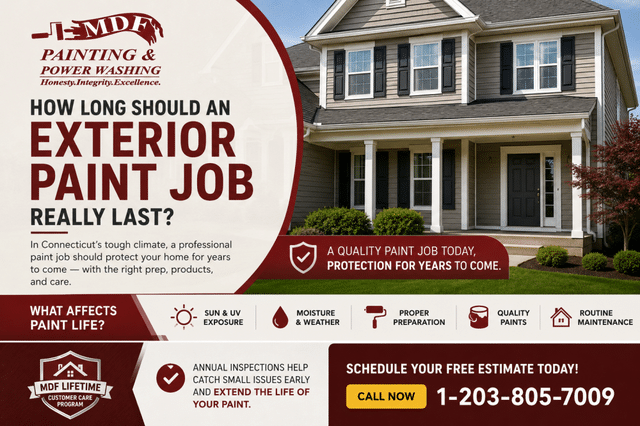
How Long Should an Exterior Paint Job Really Last?
One of the first questions homeowners ask me after investing in a professional paint job is, "How long should this actually last?" It's a completely fair question, but the honest answer isn't as simple as giving one number.
Here in Connecticut, and throughout New England more broadly, exterior paint deals with some of the toughest conditions you'll find anywhere in the country. Every single year, your home gets hit with freezing temperatures, snow, rain, humidity, UV rays, and freeze-thaw cycles that swing back and forth. If you're along the shoreline, salt air piles on another layer of wear on top of all that. A professionally done exterior paint job should give you years of protection and a great look, but exactly how many years depends on a handful of important factors.
What's a Reasonable Life Expectancy?
Every home is a little different, but here's a general guideline I give homeowners for professionally painted surfaces in Connecticut: wooden clapboard siding typically holds up for 6 to 10 years, cedar shingles tends to run a bit shorter at 5 to 8 years, fiber cement is one of the longer-lasting options at 10 to 15 years, and stucco and aluminum siding both generally land in the 8 to 12 year range. Vinyl siding that's been painted usually lasts 8 to 10 years, while trim and garage doors tend to need attention sooner, around 5 to 8 years. Entry doors, which take a lot of direct sun and handling, often need repainting every 3 to 6 years. These numbers all assume the job was done with proper preparation, quality materials, and some routine maintenance along the way.
Why Paint Doesn't Wear Out at the Same Rate Everywhere
Something that surprises a lot of homeowners is that one side of their house can still look great while another side is already fading noticeably. That's completely normal, and there are a few real reasons behind it.
Sun exposure is a big one. The south- and west-facing sides of your home take the brunt of the sunlight, and more UV exposure means faster fading, more heat-driven expansion, and generally more stress on the paint film. It's usually those sides that need attention first, well before the shaded parts of the house do.
Additionally, your color does matter. Generally, lighter colors with a higher Light Reflectance Value (LRV) last longer than darker colors. Quick tip: look for colors with an LRV above 80 for the longest lasting exterior coating in New England.
Moisture is paint's biggest enemy. Paint naturally expands and contracts as the temperature shifts, but repeated exposure to water speeds up that wear considerably. I typically see the worst of it around window trim, rooflines, gutters, deck connections, and anywhere a leaking downspout has been quietly soaking the same spot for months. Keeping water away from painted surfaces does more to extend their life than almost anything else you can do.
Surface preparation might be the single biggest factor of all, and it's determined entirely before the first coat ever goes on. Proper prep means washing, scraping, sanding, caulking, priming any bare wood, and repairing damaged areas — skip these steps, and you can knock years off the life of the finish without even realizing it. If anyone tells you that pressure washing is a substitute for sanding–they are flat out wrong. The washing phase is meant to remove dirt, mold and mildew. Skip on scraping and sanding and the paint job is doomed before it begins.
Paint quality matters too. Not all paints are created equal, and premium exterior coatings generally offer better UV resistance, more flexibility, stronger moisture resistance, better color retention, and longer warranties. Yes, they cost more upfront, but they tend to deliver a lot more value over the life of the paint job.
And then there's Connecticut weather itself, which really does test a paint job all year round. Winter brings snow, ice, and freeze-thaw cycles. Spring brings heavy rain and high moisture. Summer brings strong UV exposure, heat, and humidity. Fall brings cooler temperatures and falling leaves that tend to trap moisture against surfaces (especially decks). Your exterior coating has to hold up against all four of those seasons, year after year, without a break.
Signs Your Paint Is Nearing the End of Its Life
You don't have to wait until paint is visibly falling off your house to take action. Keep an eye out for fading color, chalking, hairline cracking, caulk that's starting to fail, small peeling areas, exposed wood, staining, or a general loss of sheen. Catching any of these early gives you the chance to repaint before you're looking at more serious and more costly repairs.
Why Preparation Matters More Than the Paint Itself
Here's something a lot of homeowners don't realize: even the best paint in the world won't perform well if it's applied over a poorly prepared surface. Proper preparation is what gives you better adhesion, a longer-lasting finish, a more even appearance, less peeling, and overall better durability. Honestly, it's one of the biggest differences between a paint job that lasts five years and one that lasts ten or more.
Can You Make Your Paint Last Longer?
Absolutely, and it doesn't take much. Washing your home once a year with a gentle soft wash removes dirt, mildew, pollen, and salt buildup that would otherwise wear down the finish over time. Inspecting your caulk annually and replacing anything cracked before water can get in prevents a lot of expensive damage down the road. Trimming back bushes and tree branches that rub against painted surfaces improves airflow and cuts down on moisture retention. Keeping your gutters clean stops overflow from repeatedly soaking your trim boards and siding. And addressing small carpentry and cracking problems the moment you notice them is almost always far less expensive than waiting for the issue to spread across the whole house.
Mark's Pro Tip
Honestly, one of the best investments you can make isn't another paint job — it's an annual exterior inspection. Every spring, take a few minutes to walk around your house and really look at the window trim, fascia boards, garage doors, south-facing walls, and the areas near your gutters. Catching small issues early can easily add several years to the life of your paint. Call our office and take advantage of our MDF Lifetime Customer Care Program and have one of our Paint Care Consultants walk you through a thorough annual inspection. The cost is FREE, you just have to make the call!
Common Mistakes I See Homeowners Make
The most common one is simply waiting until bare wood is already exposed before doing anything. Right behind that is ignoring cracked caulk, never washing the exterior, choosing paint purely based on price, and assuming every contractor preps a surface the same way — trust me, they don't, and that difference shows up years later.
Bottom Line
In New England, a professionally applied exterior paint system can typically last 6 to 10 years, and sometimes longer, depending on the surface, the preparation, the quality of the product, and how well the home is maintained afterward. The biggest factor isn't really the brand of paint on the can — it's how well the surface was prepared beforehand and how consistently the home is cared for once the project wraps up.
At MDF Painting & Power Washing, we believe a quality paint job should protect your home for years to come. That's why we focus on thorough preparation, premium products, and making sure homeowners understand how to take care of their investment long after we've packed up and left.
Frequently Asked Questions
How long should exterior paint last in Connecticut? Most professionally painted homes last somewhere between 6 and 10 years, though certain surfaces like fiber cement can last even longer with proper maintenance.
Does dark paint fade faster? Yes. Darker colors absorb more UV radiation and heat, which tends to cause them to fade more quickly than lighter shades.
Can power washing extend the life of my paint? Yes, when it's done correctly. A gentle power wash removes dirt, mildew, and other contaminants that would otherwise shorten the life of the paint.
Should I repaint before my paint starts peeling? Absolutely. Repainting before widespread failure sets in usually requires far less preparation and helps prevent moisture from damaging the materials underneath. In the long-run this will save you thousands of dollars in future prep work.
How do I know if my house needs repainting? Watch for fading, chalking, cracked caulk, peeling paint, exposed wood, or stains that keep coming back. All of these are signs that the paint system may be nearing the end of its service life.